So what do you need to have before you getting started sewing your PU coated 100% nylon, aka stretch taffeta? Most of what I have learned has been through trial and error, with the occasional nudge in the right direction from Ebay's Guide to Sewing Water Repellent or Waterproof Fabrics.
Pins
Pin above the seam allowance (between the fabric edge and your seam), if you must pin.
Once the material is punctured, either by pins or needle, it leaves a hole where water can get in. Holes can be covered with sealant but who wants sealant on an every day garment. This also means that, if you can, try not to seam rip you garment. If you are unsure about the fit, try practicing with material that is of similar weight and stretch as the garment you want to make with the PU coated nylon. Another option is to buy extra material of the "stretch taffeta" to give you a bit of wiggle room for error(s).
Machine Tools
When this fabric is punctured or is being cut, as by a serger, there will be a lot of lint. And being nylon, it likes to attach itself every where! You may sew in one room and come to find the lint on the other side of the house, especially if you take breaks during sewing.
So you will need to keep the following handy: nylon lint brush, machine oil, scrap fabric to wipe excess oil, lint roller or masking tape, vacuum cleaner...I know I am forgetting something. Use the nylon brush liberally, whether on regular sewing machine or serger. You may also find your machine needs a quick wipe and oiling after an hour or two of sewing with the "stretch taffeta". This will help if you are starting to see snagging with the thread or fabric.
Thread
Whilst I did not have the money to buy anything other than 100% polyester thread, you can manage PU coated 100% nylon with this thread. There are somethings you may need to do differently than your normal projects, however, I have also found them useful for sewing with stretch jersey.
Repeat the manta: Wind polyester onto bobbin at a lower speed. Wind polyester onto bobbin at a lower speed. Wind polyester onto bobbin at a lower speed.
(Plus taking more time to wind the bobbin means you won't have time to get to those pesky dishes! That will have to be someone else's job.)
Needles
Use sharp needles and change them often, at least every 8 hours of sewing! The stretch to the "taffeta", even with the PU coating, acts like jersey knit but is more susceptible to punctures. If you have ever worked with swimwear, you know what I mean.
I have found that ball point jersey needles metric size 70 or imperial size 10 do the least amount of damage to the fabric. Since the fabric is so fine, I would not use any of the other jersey needle sizes larger than this. On the same note, do NOT use the microtex needles of any size on PU coated stretch taffeta. These needles are much too sharp and have a tendency to snag the fabric and knot the thread.
Pressure Foot
Unlike PUL (polyurethane laminate) or vinyl fabric, there is NO major slip resistance to PU coated nylon! This means you do not have to spend extra money on a special pressure foot just for your project. (You can pause here for your happy dance...)
Interfacing
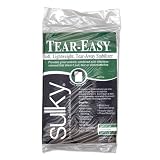 Whilst you may not need a special pressure foot, for more difficult stitches or serging, you will need interfacing or tissue paper to stabilize the stitches/seams. This is especially true if you are sewing only pieces of the "stretch taffeta" together.
Sulky's Tear-Easy would work or even left over tissue paper from gift wrapping. I had some extra tissue paper from the Victoria Secret's free panties gift coupon and had no trouble sewing with that, as you will see in the next post.
Continue this series with:
PU Coated Nylon Sewing Tips - Part 1: The Material
PU Coated Nylon Sewing Tips - Part 3: The Method
See anything in error? Know of a better method or tip? Post a comment below or send me an email. Everything I know about PU coated stretch taffeta I have learned by doing and am in NO way an expert.
Pins
Pin above the seam allowance (between the fabric edge and your seam), if you must pin.
 |
| Seam ripped punctures on both sides of fabric. |
Machine Tools
 |
| Clockwise from top left: machine oil, lint roller, nylon brush and scrap fabric. |
When this fabric is punctured or is being cut, as by a serger, there will be a lot of lint. And being nylon, it likes to attach itself every where! You may sew in one room and come to find the lint on the other side of the house, especially if you take breaks during sewing.
So you will need to keep the following handy: nylon lint brush, machine oil, scrap fabric to wipe excess oil, lint roller or masking tape, vacuum cleaner...I know I am forgetting something. Use the nylon brush liberally, whether on regular sewing machine or serger. You may also find your machine needs a quick wipe and oiling after an hour or two of sewing with the "stretch taffeta". This will help if you are starting to see snagging with the thread or fabric.
Thread
Whilst I did not have the money to buy anything other than 100% polyester thread, you can manage PU coated 100% nylon with this thread. There are somethings you may need to do differently than your normal projects, however, I have also found them useful for sewing with stretch jersey.
According to the user plrlegal on "Sew What's New" message board (last comment on the first page), she says (with my emphasis):
I actually would use a 3-3.5 mm stitch (8-10 stitches per inch on my Pfaff 4.0) and a silk wrapped polyester thread. Taffeta is one of the fabrics that if you use small stitches on it, it will tend to pucker, especially with polyester thread that has been tightly wound at high speed onto a bobbin. Polyester thread is one of the threads when tightly wound a high speed onto a bobbin will stretch and then when it is sewn into a seam will shrink back to its original length, thus causing the puckering in garment seams. If it is at all possible, you should wound polyester onto a bobbin at a lower speed to prevent stretching.
Repeat the manta: Wind polyester onto bobbin at a lower speed. Wind polyester onto bobbin at a lower speed. Wind polyester onto bobbin at a lower speed.
(Plus taking more time to wind the bobbin means you won't have time to get to those pesky dishes! That will have to be someone else's job.)
Needles
 |
| schmetzneedles.com |
I have found that ball point jersey needles metric size 70 or imperial size 10 do the least amount of damage to the fabric. Since the fabric is so fine, I would not use any of the other jersey needle sizes larger than this. On the same note, do NOT use the microtex needles of any size on PU coated stretch taffeta. These needles are much too sharp and have a tendency to snag the fabric and knot the thread.
Pressure Foot
Unlike PUL (polyurethane laminate) or vinyl fabric, there is NO major slip resistance to PU coated nylon! This means you do not have to spend extra money on a special pressure foot just for your project. (You can pause here for your happy dance...)
Interfacing
Whilst you may not need a special pressure foot, for more difficult stitches or serging, you will need interfacing or tissue paper to stabilize the stitches/seams. This is especially true if you are sewing only pieces of the "stretch taffeta" together.Sulky's Tear-Easy would work or even left over tissue paper from gift wrapping. I had some extra tissue paper from the Victoria Secret's free panties gift coupon and had no trouble sewing with that, as you will see in the next post.
Continue this series with:
PU Coated Nylon Sewing Tips - Part 1: The Material
PU Coated Nylon Sewing Tips - Part 3: The Method
See anything in error? Know of a better method or tip? Post a comment below or send me an email. Everything I know about PU coated stretch taffeta I have learned by doing and am in NO way an expert.

No comments:
Post a Comment